Understanding Dance Growth, Plateaux and Bad Habits
Understanding Dance Growth, Plateaux and Bad Habits - Part 1
Introduction
One area that I feel has very little attention in Zouk teaching is the setting & managing of progression expectations versus time frame in learning Zouk (especially if you’ve never danced before).
I hope when you’ve finished reading this blog, it will not discourage you from taking up (or giving up Zouk if you have already started) but instead, provide you with an understanding that learning to dance is a very long and continuous journey that requires much time, effort, dedication and study.
If you stick to it, in return, it will empower you with one of the greatest gifts; the power to connect and communicate with people beyond words could describe. The journey you embark is a lot of fun and comes with constant challenges, which is one major factor why we do it!
To help explain my experiences and perspective of how dance growth works, I’ve created graphs. These graphs are for illustrations purposes only and does not contain any real metrics. It should help you understand how your body and mind perform in processing dance information on the go.
This does not factor how much knowledge and understanding you know of dance. For clarity, how much you know of dance is not the same as having the ability to apply it into your dance. These are two different things, knowledge comes from studying and the ability to apply comes through practice.
One major positive influence to your dance growth in learning Zouk is if you are proficient in many other dances, especially another social dance that offers a solid dance foundation.
In this series, you will find 3-parts:
Part 1:
- Dance growth is not linear.
- What are dance plateaux.
- The forever dance plateau.
Part 2:
- Picking up bad dance habits & incorrect techniques.
- Becoming worse than when you’ve started out.
Part 3:
- Building a dance solid foundation.
- Bonus for reading this far.
- Final Words
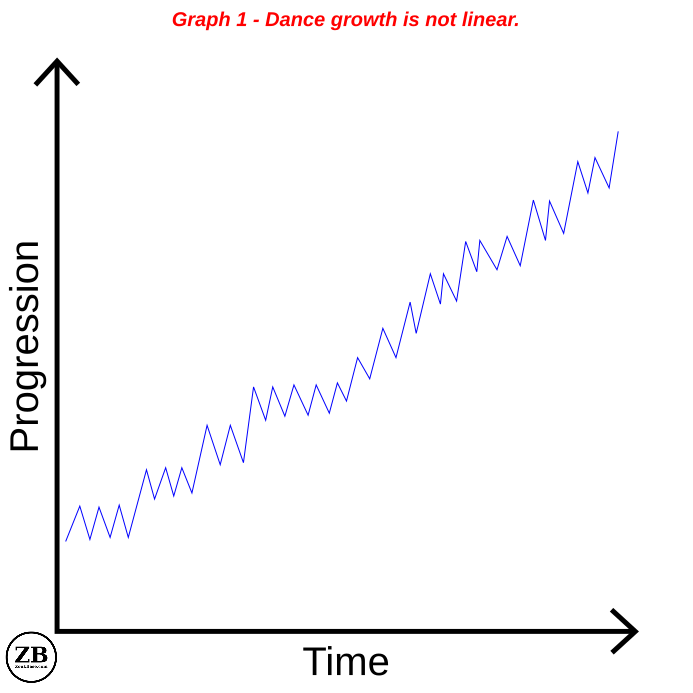
Dance growth is not linear
Learning to dance is certainly not a smooth ride. Graph 1 illustrates your progressions going up and down constantly.
To improve in dance, it’s about teaching your body, mind and emotional energy to work musically and executing the techniques correctly & safely. Another important aspect is training and developing the correct muscle groups required for balance and executing dance movements.
You will have days where you feel that it’s getting better and days you feel like it’s getting worse. This is normal as you are learning to apply dance concepts that your mind & body is unfamiliar with. Just keep at it.
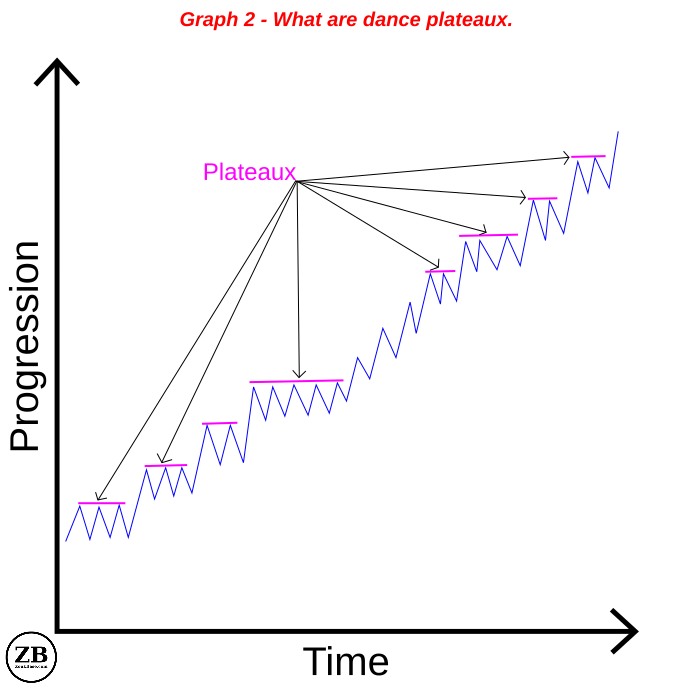
What are dance plateaux
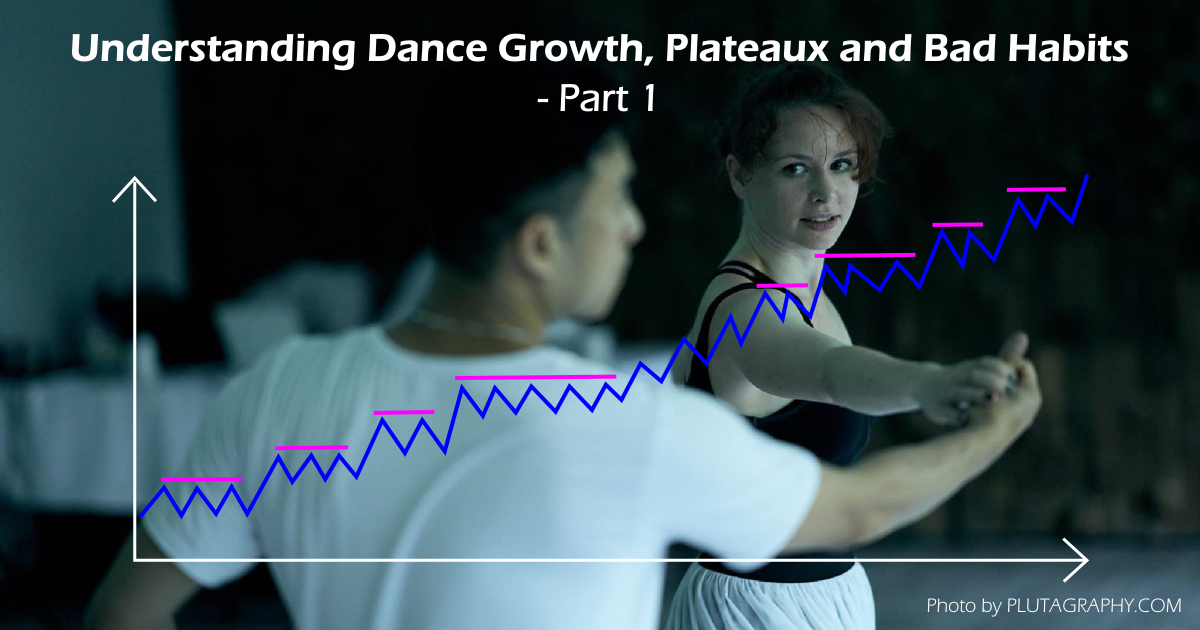
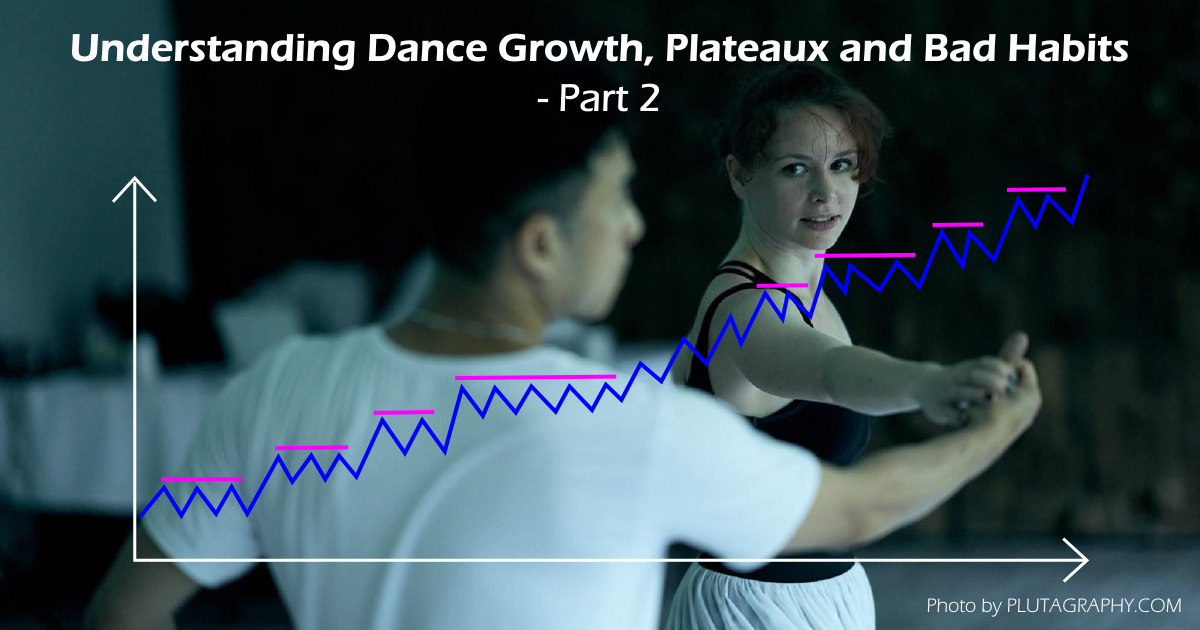
Graph 2 shows that we are constantly facing dance plateaux and it’s the obstacle that blocks us from improving.
Regular practice is required for you to overcome every plateau and reaching new heights with your dance.
Unfortunately irregular practices will not get the same results because we all should know that learning enforcement comes through regular repetitive motor actions.
As my general rule of thumb, I only count a minimum twice a week of 1+ hour classes or self-routine practices as regular practice. Anything less is irregular.
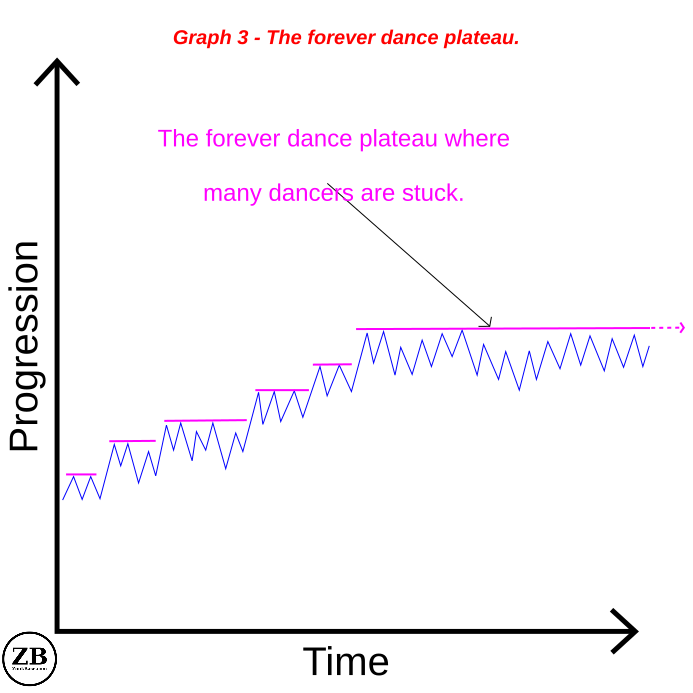
The forever dance plateau
As a dancer, graph 3 shows one position that I would never want to be stuck in. This usually happens when dancers start learning for the first couple of years, then they stop going classes or practicing.
The dancers at this forever plateau stage are usually by choice because they have found their comfort zone or have life priorities other than dance. They generally enjoy just social dancing and may attend a class once in a blue moon.
Understanding Dance Growth, Plateaux and Bad Habits - Part 2
This is part 2 of 3 of ‘Understanding Dance Growth, Plateaux and Bad Habits’. Click here to start with part 1 if you’ve not read it yet.
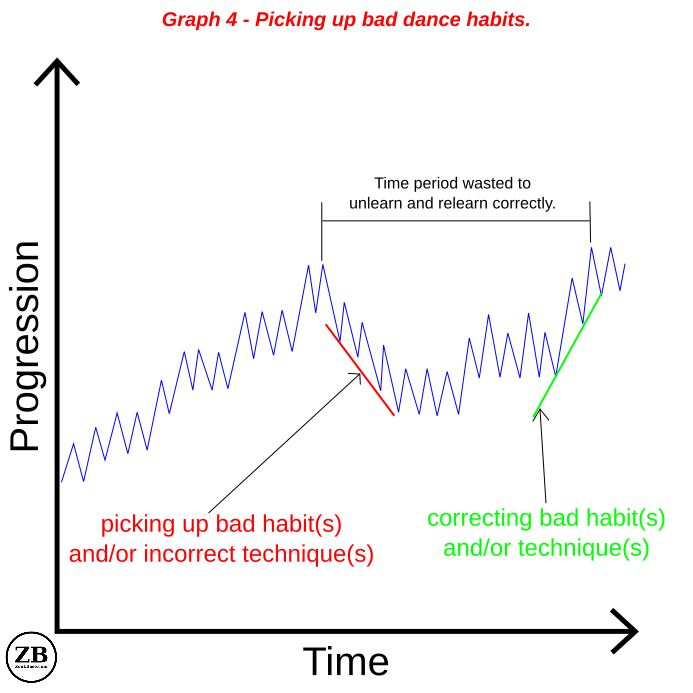
Picking up bad dance habits & incorrect techniques
Graph 4 shows the negative effect on your dance growth when you pick up bad habits or incorrect techniques.
Picking up bad habits can happen anytime and anywhere. One common cause is trying to learn movements that require using correct techniques.
When it comes to picking up bad/incorrect techniques, I can see 3 common causes:-
- Bad teaching where technique explanations are not clear or non-existence or missing context so students starts making assumptions or misunderstand.
- Bad teaching again, where teachers are trying to teach techniques beyond their ability, knowledge and understanding.
- Trying to learn a technique by yourself through visual learning without guidance of a qualified professionals who understand the intrinsics of the technique.
Correcting bad habits would require someone who can identify them. Usually a professional teacher can help, hence why privates or small classes are important where you have adequate amount of teacher’s attention.
Technique is something you should always go learn through a reputable professional teacher and not something to try and learn without proper guidance. Again, small classes or privates are great to avoid wasting valuable resources (time and money) to unlearn and relearn.
Please note, some techniques, concepts and movements may be easier to learn than others for different people. There are many techniques and concepts that can’t be and shouldn’t be learned without having a solid foundation, otherwise you will negatively impact your dance development and progression. Don’t run before you’ve learned how to walk.
Becoming worse than when you’ve started out
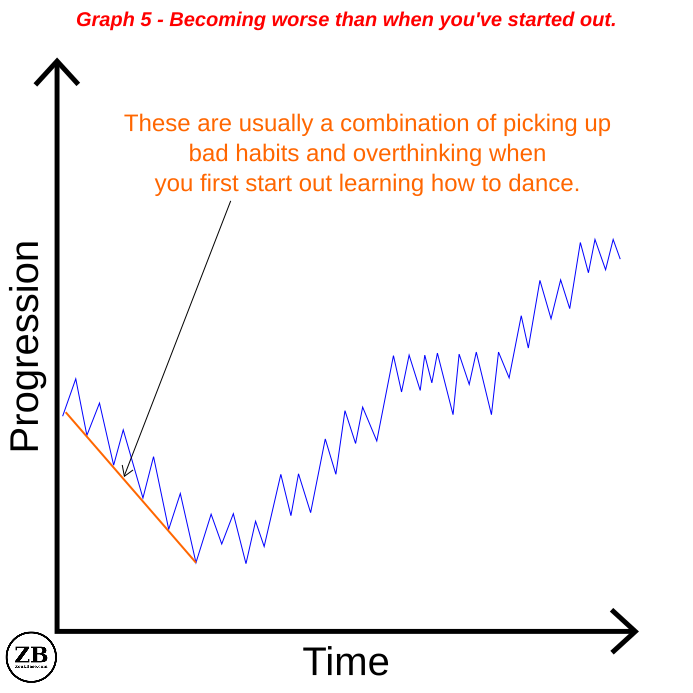
I always enjoyed dancing with complete beginners but having danced again with them in 1-6 months later of classes, they often seem to have gotten worse.
Graph 5 illustrates how you can actually get worse from starting out. Yes, it’s possible!
I believe there are 2 main root causes and reasons for this:
- Our early enthusiasm and fascination of seeing beautiful dance movements by experienced dancers and our failed attempts of mimicking complex movements with an untrained body.
- At this very early stage, our body and mind are not proficient in multitasking the many different aspects needed to create an emotionally energy driven and coordinated dance. We over think every detail learned in classes and try too hard to apply it all at once.
To reduce or prevent the chances of becoming worse than you’d started out, avoid learning complex movements or patterns. Instead, stick with practicing plain simple basic techniques, concepts and movements. Again, don’t attempt to run before you can walk.
You should subscribe to our newsletter and keep an eye out for a future blog called “The Key To Effective Dance Practice”. This would help prevent or reduce the early stage decline in progression and also assist your overall dance growth.
Understanding Dance Growth, Plateaux and Habits - Part 3
This is the 3rd and final part of ‘Understanding Dance Growth, Plateaux and Bad Habits’. Click here to start with part 1 if you’ve not read it yet.
Building a dance solid foundation
I’m sorry to be the one telling you this, but there is no quicker way in learning to dance. If someone tells you otherwise or is selling you the idea that they know shortcuts, then they probably don’t know how to dance and you shouldn’t be listening to them.
The only shortcut is learning right the first time.
In order to build a solid dance foundation, check out ‘A Guide to Different Types of Zouk Classes’. It will give you some ideas in the right direction.
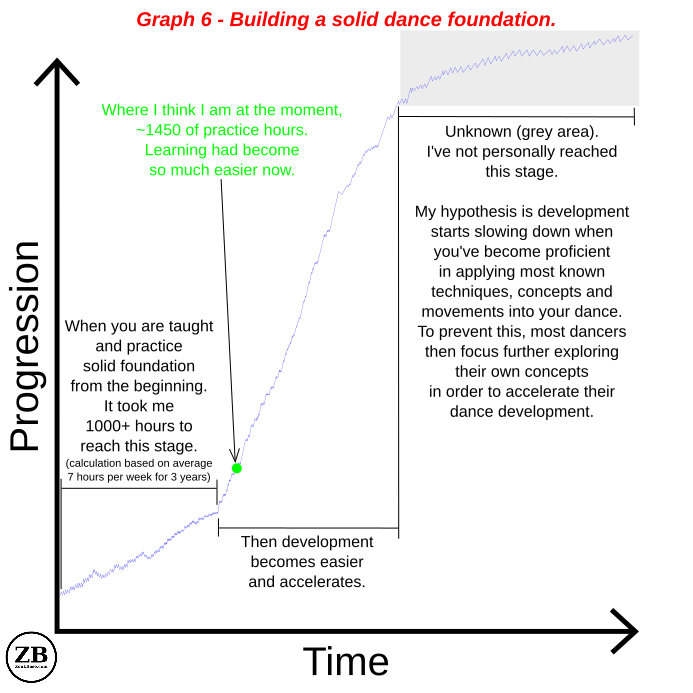
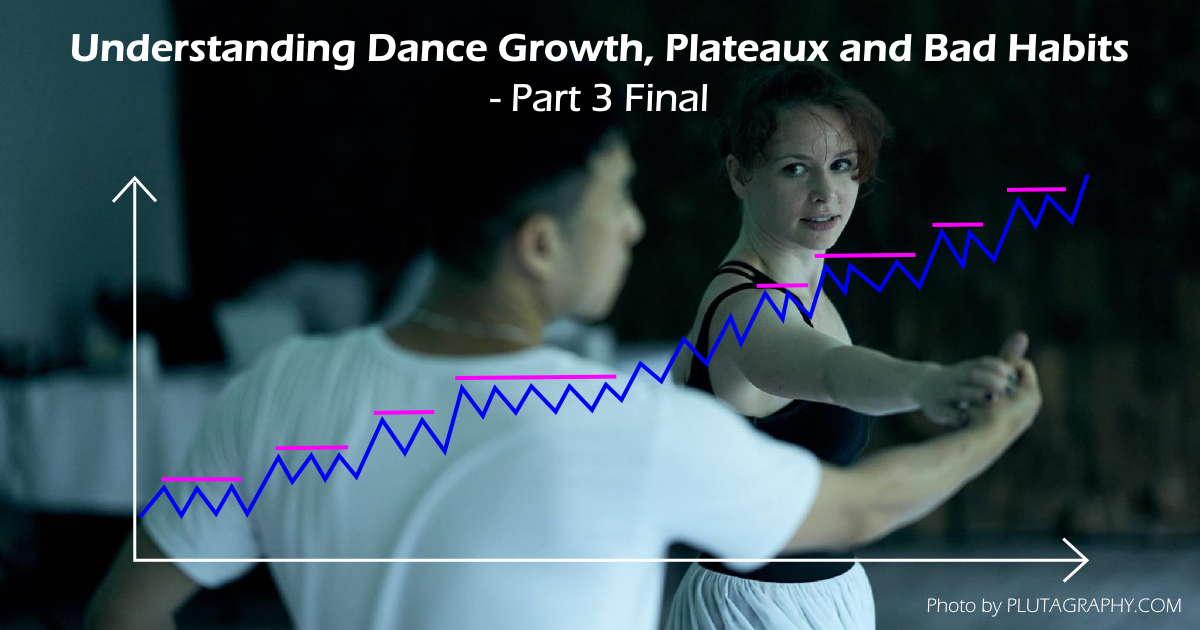
Graph 6 shows ideally the reason why you would want to build a solid dance foundation and once you have hit the breakthrough stage, your development would accelerate.
The time it takes you to build a solid dance foundation will vary from person to person, so if it takes you more than 1000+ hours of practice - don’t worry. It’s all about consistency and turning up to classes and practicing every week.
The reason why I chose to explain in practice hours rather than how many years is because I want you to take note of this important metric and magnitude it requires to be somewhat proficient at dancing Zouk. Someone who practices 1 hour a week for 3 years will obviously have a different progression compared to someone who practices 7 hours a week for 3 years.
A very important note is dance foundation isn’t something that you develop only once, it’s actually an ongoing reinforcement process even after reaching the acceleration breakthrough point.
The stronger your dance foundation, the more amazing and complex techniques can be utilised simultaneously into your dance, without having toppling effects.
Bonus for reading this far
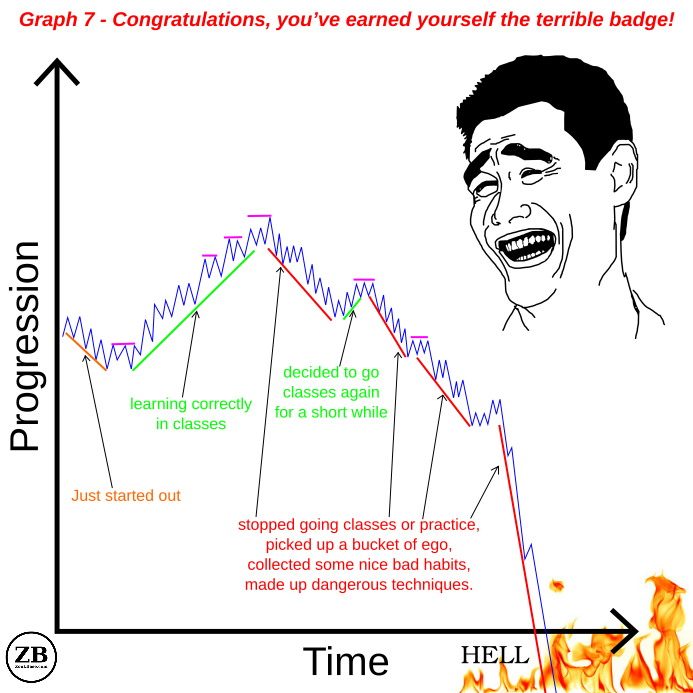
Graph 7 is very much self-explanatory. Not many more words needed to be said!
Final Words
I hope this blog had helped set some of your learning expectations and offered some tips for improving.
If you liked this blog and also have friends who recently started out their dance journey, then please share this with them.
What I would like to ask those who had been dancing Zouk for a while is to draw your Zouk progression vs time graph. Even if you could sketched it onto a piece of paper, take a photo on your phone and share it on facebook as a comment to this post.
This would be very interesting to see and please be as honest and realistic as you can.
Thank you and I look forward to reading all your comments!
Hoi from DZ.